Centuries ago, before property portals, maintenance apps, and midnight text alerts, a landlord might have heard the same dreaded knock on a wooden door: something in the home had broken, and someone had to fix it.
The tools have changed, but the story remains remarkably familiar.
Today, in South Carolina's fast-growing rental housing market, a landlord fails to address a leaking pipe, failing HVAC system, or unsafe repair, and yesterday's small inconvenience can become tomorrow's expensive problem.
You cannot prevent every repair, but you can change what happens next.
By keeping your property in a reasonably safe condition, understanding your additional responsibilities, and making clear what is and is not specifically excluded from the rental agreement, you can protect your investment while giving potential tenants a home they can trust.
A proactive maintenance strategy keeps your property in safe condition, limits avoidable costs, and turns routine upkeep into a foundation for long-term value.
Key Takeaways
Property owners can reduce maintenance costs by taking a proactive approach, documenting responsibilities, and addressing problems before they become expensive repairs or affect the habitable condition of a rental.
Your lease agreements should clearly explain tenant responsibilities, including what happens when a tenant fails to maintain the property, pay rent, or follow agreed requirements, while accounting for additional responsibilities that may apply under South Carolina law.
Understanding tenant rights, security deposits, reasonable heat, and the landlord's duty to provide essential services can help you avoid disputes, protect your money, and support long-term success.
Start With a Rental Agreement That Sets Clear Expectations
Your first low-maintenance strategy begins before a tenant moves into the rental unit: make your lease or rental agreement clear about responsibilities. A well-written agreement can clarify maintenance expectations, access procedures, tenant obligations, and reporting requirements, providing a framework for handling issues without reinventing the process each time.
South Carolina law defines a rental agreement broadly and allows landlords and tenants to establish lawful terms governing the use and occupancy of a dwelling unit. At the same time, those terms cannot simply eliminate duties imposed by the Residential Landlord and Tenant Act.
Define Maintenance Responsibilities Before Tenants Move In
You can reduce confusion by identifying responsibilities for everyday maintenance tasks without shifting obligations imposed by South Carolina law. Your agreement can address matters such as cleanliness, reasonable use of appliances, reporting needed repairs, landscaping where appropriate, and procedures for requesting access.
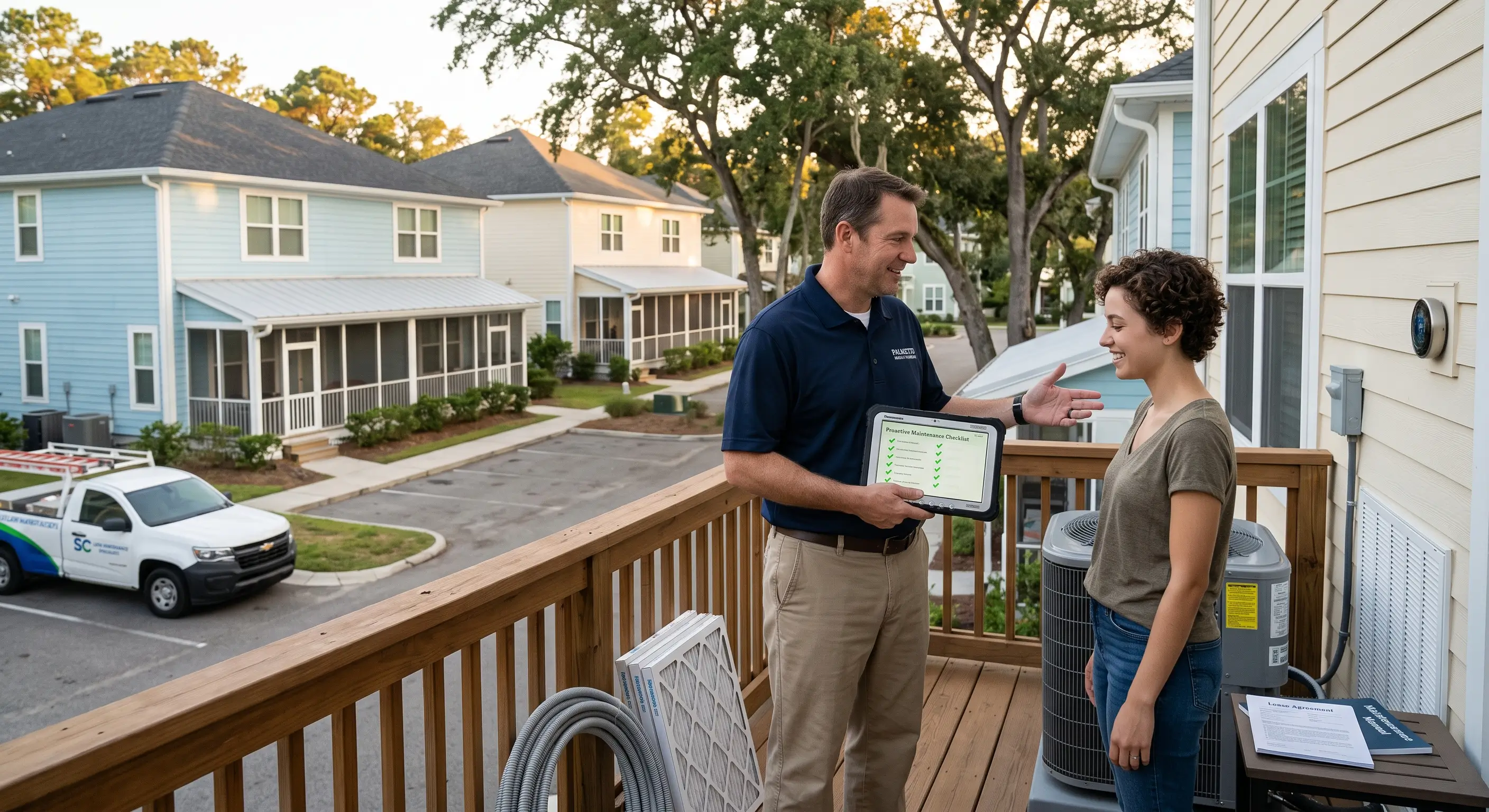
For example, if an air conditioning system stops working, your tenant should know exactly how to submit a maintenance request rather than attempting an unauthorized repair or waiting until a small problem becomes an emergency. Clear instructions protect the property, improve communication, and help you respond within a reasonable time.
A practical rental agreement should clarify:
How tenants submit maintenance requests
What constitutes an emergency
How you communicate during repairs
Which routine tasks do tenants handle?
How property access is coordinated
What Property Maintenance Responsibilities Do South Carolina Landlords Have?
Low-maintenance ownership does not mean avoiding legally required property maintenance. Under South Carolina law, landlords must comply with applicable building and housing codes that affect health and safety. They must also make repairs reasonably necessary to keep the premises fit and habitable, maintain common areas safely, and provide certain essential services.
Your responsibilities can include keeping supplied electrical, plumbing, heating, ventilating, and air-conditioning systems, along with supplied appliances, in reasonably good and safe working order. South Carolina law also addresses running water, reasonable amounts of hot water and heat, and allows limited written arrangements for certain maintenance tasks under specific circumstances.
Use Preventive Maintenance Before Problems Become Expensive
Waiting for something to break is rarely a low-maintenance strategy; prevention is usually the better workflow. Instead of treating every repair as an isolated event, you can create recurring inspections for HVAC systems, plumbing, electrical components, appliances, exterior areas, drainage, and other systems that protect your rental property.
A simple preventive maintenance schedule might include:
Monthly HVAC filter and visible leak checks
Seasonal heating and air conditioning inspections
Regular plumbing and electrical observations
Annual inspection of major appliances and exterior systems
Move-in and move-out property condition checks
This approach can help you identify needed repairs earlier, and plan expenses more deliberately. It can also reduce the likelihood that a minor defect turns into an emergency repair that disrupts your tenant's tenancy and your cash flow.
How Can You Make Maintenance Requests Easier to Manage?
A maintenance request becomes much easier to handle when you have a repeatable workflow from notification to completion. Give renters a clear way to report problems, document the issue, determine its urgency, coordinate access, assign the appropriate vendor, and confirm that the repair is complete.
That process matters particularly in coastal South Carolina communities such as Charleston, Summerville, Mount Pleasant, Myrtle Beach, and Pawleys Island, where property conditions and local housing expectations can vary. The Agency Group serves these and other South Carolina Coastal communities, giving owners access to local oversight rather than relying entirely on remote coordination.
Turn Responsive Maintenance Into Better Tenant Retention
Maintenance is also a tenant-retention strategy because renters notice how quickly and professionally you respond when something goes wrong. If a tenant reports a failing air conditioner and receives clear communication, timely coordination, and a documented resolution, the experience can reinforce confidence in the property and the landlord.
You can strengthen your maintenance workflow by:
Acknowledging requests promptly
Prioritizing health and safety concerns
Giving reasonable updates during repairs
Documenting completed work
Following up after the repair
South Carolina law also gives tenants specific remedies when a landlord's noncompliance materially affects health, safety, or the physical condition of the property, including written-notice procedures in certain circumstances. Understanding those requirements helps you respond appropriately rather than allowing an unresolved maintenance issue to escalate into a dispute.
Which Proactive Strategies Can Reduce Your Long-Term Workload?
The most effective low-maintenance strategies look beyond individual repairs and focus on the property's entire operating cycle. You can reduce recurring headaches by selecting durable improvements, tracking maintenance history, budgeting for predictable expenses, inspecting regularly, and watching for patterns that signal a larger issue.
Market conditions make that discipline particularly relevant. Zillow reported average August 2026 rents of about $2,312 in Charleston, $1,572 in Greenville, and $1,600 in Columbia, with year-over-year changes varying by market. This underscores why rental owners should evaluate property performance locally rather than assuming every South Carolina market behaves the same way.
When Should You Consider Professional Property Management?
If coordinating tenants, maintenance requests, inspections, rent collection, lease administration, and vendors starts to consume more time than your rental income justifies, professional property management can turn those scattered responsibilities into a single operating system. The Agency Group provides long-term and mid-term management, including leasing, tenant screening, lease administration, rent collection, property maintenance, regular inspections, maintenance coordination, and financial reporting.
For vacant, seasonal, or absentee properties, The Agency Group also provides Home Watch services with scheduled inspections, maintenance coordination, and emergency response, while its HomeCare Essentials Plan includes recurring HVAC filter changes and other routine upkeep. That proactive model can help you protect your property while spending less time chasing the details yourself.
Frequently Asked Questions
Q1. What happens if a landlord refuses to make necessary repairs?
If a landlord refuses required repairs, tenants may have remedies after proper landlord notice, including options tied to maintaining a fit and habitable condition.
Q2. Can a tenant be responsible for the actual and reasonable cost of repairs?
Potentially. If a tenant fails to meet a responsibility established by law or the lease, you may be able to recover the actual and reasonable cost, subject to applicable rules.
Q3. Can a landlord take a tenant to the magistrate's court for an eviction lawsuit?
Yes, certain disputes may proceed to the magistrate's court, but the applicable notice, date, lease term, and legal requirements must be satisfied. These protections are part of tenant rights and may differ from those in many other states.
Let Your Property Work Smarter, Not Harder
At The Agency Group Real Estate Property Management, we believe your rental should support your goals, not consume your calendar; through proactive property management, tenant screening, leasing, rent collection, maintenance coordination, inspections, financial reporting, and Home Watch, we help keep the moving pieces organized.
Across South Carolina's Lowcountry and Coastal communities, we build management systems around protecting your property today while supporting its long-term value tomorrow.
If you are ready to trade reactive repairs for a more deliberate approach, we invite you to connect with us and explore a management strategy built around your rental, your time, and your plans for future growth.
Other Resources:
South Carolina House Bill 3232: What Proposed Mold Rules Could Mean for Coastal SC Owners
Property Taxes, HOA Fees, and More: Understanding the True Cost of South Carolina Rentals